
Sustainability Report
BE Group’s vision is to be the most professional, successful and respected steel service company on the markets the company is active. The business idea not only includes BE Group being a leading player in terms of buying, selling and processing steel, but also being a professional partner to the customers. BE Group should be a support in their development, help them identify both strengths and weaknesses and be able to offer the best solution in terms of availability, expertise and delivery accuracy. BE Group’s sustainability work is based on creating conditions for small and mid-sized companies to buy sustainable steel at competitive prices.
Business model
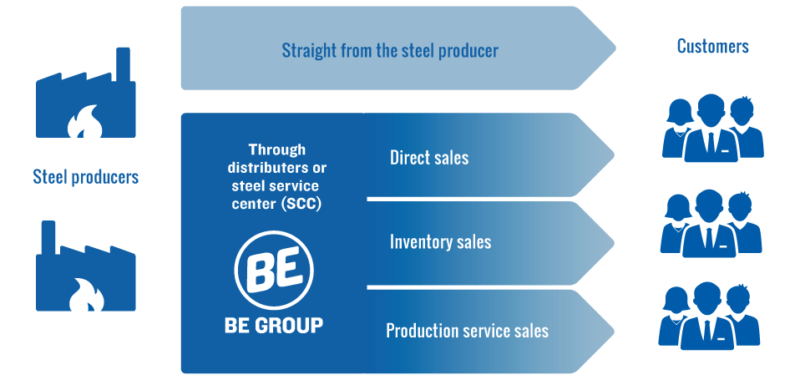
BE Group is a trading and service company that offers efficient distribution and value-generating production service in steel, stainless steel and aluminum to the construction and manufacturing industries in Europe. BE Group’s role is to compensate for the gap between steel producers’ delivery capacity and steel consumers’ needs. BE Group creates value to its customers through efficiency and coordination of sourcing, transportation and warehousing of a wide selection of commercial steel, engineering steel, stainless steel and aluminum. BE Group’s sales to customers take place in three different ways; Inventory sales, Production service sales and Direct sales.
PRODUCTS
Long steel products
Beams, hollow sections, bars and tubes. Used in every construction imaginable, such as steel framework, trusses, bridges, vehicles and machines.
Flat steel products
Plates and sheets in various forms, including hot-rolled, cold-rolled or metal-coated. Used, for example, in construction, automotive, machining and process industries.
Stainless steel
Plates, sheets, bars and tubes. Used in corrosion exposed and demanding constructions, for example in the construction, machining, medicine and process industries.
Engineering steel
Alloyed and unalloyed structural steel surface modified bars and hollow bars. Used when there is a need for material with improved cuttability, hardenability or durability.
Aluminium
Plates, sheets, bars and tubes. Used by subcontractors and OEMs, for example in construction, signs and road signs and in the aviation, automotive and packaging industries.
Rebars
Straight steel, mesh reinforcement and prefabricated reinforcement. Used to reinforce concrete to increase the concrete’s strength and prevent fracturing in buildings and infrastructure.
SERVICES
Production service
BE Group offers production service of steel, stainless steel and aluminium with production resources within thermal cutting, drilling, sawing, slitting, blasting and painting. Production service involves different processes where steel and other metals are processed to fulfil the customer’s specific needs.
Material advice and services
BE Group also offers material advice, logistics solutions and time-saving IT services that include web-based e-commerce, EDI, digital notifications and electronic invoices.
BE Group’s sustainability work
BE Group is working to reduce the Company’s environmental impact and to be an economically, socially and ethically responsible actor. The sustainability issues are an important part of the operations and the goal is for them to be an integral part of daily activities and be viewed as strategic decisions and investments. The scope of the sustainability work is set by the Group management team, which handles issues concerning strategy, goals, follow-up and communication. The managing director of the respective unit bears the operating responsibility and sets local goals and plans that are followed up by the Group management team. The result of this work is reported to BE Group’s Board of Directors and through the sustainability report to investors, media and other external stakeholders. The sustainability report pursuant to the Annual Accounts Act includes pages 11-15 and the section on risks and risk management in the Board of Director’s Report on pages 8-10. This sustainability report applies to the Group and all wholly owned subsidiaries.
The sustainability work is based on the UN Global Compact’s 10 principles for responsible enterprise and the Group works with the following:
- BE Group strives to create a safe, inclusive and stimulating workplace
The Company shall work for a good and safe working environment where accidents and illness are prevented and that the right expertise and knowledge are in the company. BE Group works to ensure diversity and equal opportunities. Everyone in the organization shall be aware of BE Group’s Code of Conduct and comply with it, and adopt the Group’s values. - BE Group works in a goal-oriented way to limit its environmental and climate impact
The Company shall strive to continuously improve its own facilities regarding energy consumption, emissions and waste management. - BE Group shall be a reliable partner to its business partners, suppliers and customers
The company shall apply sound business principles and be financially responsible. The prevention of corruption is an important part of this work. BE Group strives to develop and maintain a transparent and responsible dialog with its key stakeholders.
In 2020, the Group management team began the work to map the business based on the global sustainable development goals in Agenda 2030 and this work continued in 2021. The company’s opportunities and impact have been discussed and a plan for what can be done has been initiated. Among other things, an anti-corruption policy was prepared and approved by the Board of Directors. In 2022, the Group management team will document and specify interim targets to be achieved by the organization.
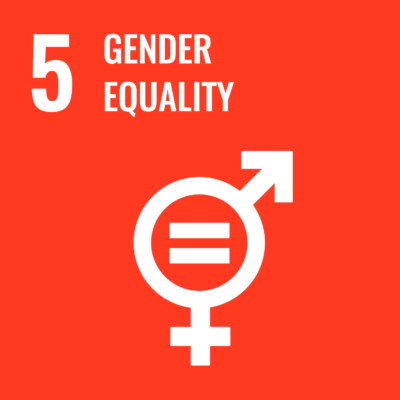
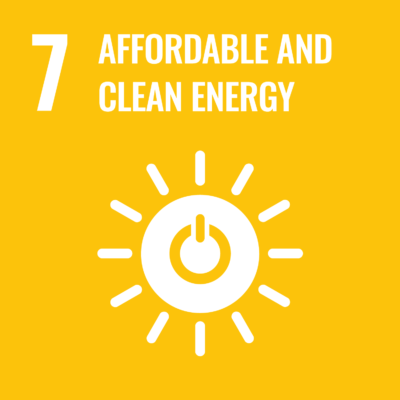
Group management has defined the following goals as particularly relevant to the business:
BE Group’s key stakeholders
In both the long term and in the daily work, BE Group affect and are affected as a company by various stakeholders, including these key stakeholders:
| Stakeholder | Expectations on BE Group | Example of dialogue |
| Customers | BE Group shall add value to all customer segments in accordance with its business model and acts with responsiveness to customer needs and in a manner that promotes trust, strengthening relations with existing customers and attracting new ones. | Dialogue is conducted for example through personal interaction, daily contacts, trade fairs, customer surveys and the website. |
| Employees | BE Group shall act responsibly both internally and externally to attract, develop and retain competent employees. Our core values guide us in how we behave towards one another in our day-to-day work. | Dialogue is conducted for example in everyday discussions, workplace meetings, employee surveys, union collaboration, internal training, incident follow-up, performance and guidance talks. |
| Shareholders | BE Group is to generate value for its shareholders through responsible and profitable company based on the Group’s business model and strategies for profitability. | Dialogue is conducted for example through the Annual General Meeting, annual reports, sustainability reports, interim reports, the website and investor meetings. |
| Suppliers | BE Group shall add value by providing efficient distribution, warehousing, pre-processing services and knowledge about our markets. The Group strives to strengthen sustainability work among suppliers through dialogue and by setting requirements. | Dialogue is conducted for example through personal interaction, daily contacts, quarterly meetings and cooperation projects. |
| Society | BE Group wants to contribute to positive social development by generating job opportunities in its own operations and among partners. BE Group shall be an open and easily accessible actor that communicates with the greatest possible transparency within the regulatory framework regarding market-sensitive information. | Dialogue is conducted for example through study visits, collaborative projects, networks and sponsorship. |
Operations
BE Group is a trading and service company that offers efficient distribution and value-added production service in steel, stainless steel and aluminum to the construction and manufacturing industries in Europe. The organization is divided into two business areas: Sweden & Poland and Finland & Baltics. Business Area Sweden & Poland includes BE Group Sverige AB, Lecor Stålteknik AB, BE Group Poland Sp. z o.o. and the joint venture ArcelorMittal BE Group SSC AB. Business Area Finland & Baltics includes BE Group Finland Oy Ab and BE Group OÜ (Estonia) with the branches BE Group OÜ filiāle Latvijā (Latvia) and BE Group OÜ Lietuvos filnas (Lithuania). Only the wholly owned companies are covered by this report. The Group’s subsidiaries are operated as individual units under each business area.
To be able to grow and develop, good business ethics must be ensured and in its sustainability efforts BE Group is supported by several policies and guidelines: such as the code of conduct, core values, environmental policy, Safety first policy, the code of conduct for suppliers and the whistleblower policy. Subsidiaries shall comply with these ethical guidelines and policies and the managing director of each company is responsible for their application in the operations.
Suppliers
BE Group is an independent steel distributor offering products from several steel producers around the world. The Company works with a code of conduct for suppliers, which requires suppliers to act responsibly when it comes to human rights, working conditions, business ethics and the environment.
Green steel
BE Group’s ambition is to be able to help small and medium-sized companies, which most often buy steel in smaller quantities, to buy sustainable steel at competitive prices. 100% climate-compensated steel is already today a part of the offering to customers. Discussions are being held with several European steel producers and the Company is following the trend towards lower, and ultimately zero, emissions of fossil carbon dioxide within the Voestalpine H2Future and ArcelorMittal Xcarb projects. During the year, the Company signed a letter of intent regarding cooperation and distribution of fossil-free steel with H2 Green Steel (H2GS). The agreement, which means that BE Group will be able to deliver green steel to the Nordic market starting in 2025, is an important step in the company’s ambition to eventually be able to offer a complete range of sustainable steel.
Anti-corruption
BE Group’s Code of Conduct contains guidelines for business ethics and anti-corruption. To further illustrate this important area, the Group management team developed an anti-corruption policy during the year that was approved by the Board of Directors. It has been translated into the local languages and will be implemented in the organization in 2022.
Taxes
BE Group conducts operations in various countries with different tax laws and legislative authorities and strives to pay the correct tax in every country. Changes in laws and case law are continuously monitored so that taxes are handled in accordance with current laws and rules. If applicable, guidance is sought at the local tax authority or with external tax advisers, such as audit and accounting firms, to clarify relevant tax issues.
Risks and risk management in BE Group
BE Group’s profits and financial position are affected by a large number of factors. The Group operates in several countries and is therefore exposed to various risks as a consequence of differences in legislation, regulations and guidelines. Risk management within the Group is guided by established policies and procedures that are revised by the Board of Directors and/or Group Management on an ongoing basis. All risks are handeled as a part of BE Group’s sustainability work. The most important risks and factors of uncertainty for BE Group can be divided between:
- Market risks
- Operational risks
- Financial risks
Read more about the identified risks and risk management in the Board of Director’s report.
Reporting according to the EU taxonomy
BE Group has reviewed the operations based on the EU Taxonomy Regulation and has not identified any applicable sales linked to the taxonomy at present. Since BE Group has not identified any sales that can be linked to the taxonomy, the Company has also not identified any Capex or Opex linked to category a or b. Nor is it possible to determine whether there is any Capex or Opex linked to category c since there is no information available from suppliers. Without this information, we are not able to identify and link them to the taxonomy for the current year, but we have the ambition to be able to do this moving forward.
Total sales are based on our consolidated net sales. Total capital expenditure (Capex) consists of the year’s investments in tangible and intangible assets, as defined in Notes 13 and 14. Total operating expenses (OPEX) consist of direct non-capitalized costs related to short-term leases, maintenance and repairs and other expenses related to the day-to-day maintenance of our tangible assets. Category a means that the Company has no investments or operating expenses linked to current sales and category b means that the Company has no investments or operating expenses that are linked to future sales. Category c means that it is possible to include other investments and operating expenses if they are purchased from suppliers with applicable sales linked to the taxonomy and where the activity leads to reduced climate impact.
BE Group is an independent steel wholesaler that buys materials from the steel mills and sells them on to customers with some processing in the form of production services, such as cutting, sawing, blasting and painting. BE Group has no impact in the production of the materials and does not sell finished products, with the exception of Lecor Stålteknik, which on assignment manufactures prefabricated steel structures for construction and industrial projects. BE Group provides transports, particularly road transports, and this is part of the sales that the company has chosen to subcontract to third parties. BE Group surveys emissions from transports and works to reduce the environmental impact by assessing suppliers but has no direct impact on operations.
The assessments in the analysis were made on public information available on January 31, 2022.
NET SALES
SEK 5 388 M (3 672)
UNDERLYING OPERATING RESULT
SEK 529 M (96)
OPERATING RESULT
SEK 621 M (39)
RESULT AFTER TAX
SEK 495 M (4)
RESULT PER SHARE
SEK 38,10 (0,33)
AVERAGE NO EMPLOYEES
621 (633)
Corporate culture
BE Group’s ambition is to create a stimulating and healthy work environment for employees and all workplaces within BE Group to be safe and pleasant and free from harassment and discrimination. The employees are our most valuable asset and a prerequisite for the Company to perform well.
BE Group’s corporate culture is based on what is defined as the Group’s core values. These values shall permeate the entire organization and create security and understanding, provide guidance in how we should relate to one another and to our surroundings, and form the basis for clear communication, both internally and externally. BE Group has focused on three key words for this work and they are dynamic, transparent and sustainable. Read more about the core values at www.begroup.com.
Safety first
Health and safety is a priority area at the workplaces and there is a Safety First policy with a zero vision regarding workplace accidents. The basic idea is that all accidents can be prevented and safety must come first at all times. During the year, the units worked locally to assess and address risks in the operations and to prevent accidents. They have steering documents in place and regular follow-ups, workplace meetings and training sessions. Each accident and incident are reported, evaluated, followed up and resolved.
In 2021, 16 accidents (16) were reported, resulting in more than one day’s absence. Moving forward, the units will continue to work proactively and focus on increasing the proportion of risk observations at the workplaces. Once the processes are in place, it is important to work behavior-based.
Code of Conduct
BE Group’s Code of Conduct is established by the Board of Directors and comprises all operations and employees within BE Group. The ethical guidelines provide guidance in the daily work to achieve the Group’s goals and point out everyone’s responsibilities towards business partners, owners, employees and society. The Code addresses issues of business ethics, anti-corruption, child labor, equality, work environment, career issues and competence development.
Leadership principles
In addition to the values, BE Group has eight leadership principles that are common to the entire Group. They must create uniformity and clarity regarding the expectations of how a manager should be and act to be a role model and contribute to creating a good work environment and a successful company.
Employees
BE Group’s ambition is to be seen as an attractive employer where employees thrive and can develop. The company is dependent on new staff with new ideas and experiences that balance the long-term expertise that exists.
Once a year, BE Group conducts a Group-wide employee survey to ensure that the strengths and improvement areas that exist in the work environment are illustrated. The survey is done anonymously and takes up issues that, among other things, include the Company’s strategy, values and safety and shed light on any harassment at the workplace. The results are presented by department and every group work on preparing an action plan for the improvement areas established. The employee survey is sent to all employees and 84% of the employees chose to participate in 2021. The employee survey measures four different indices: Engagement, Leadership, Team efficiency and Psychosocial work environment and, in all of the indices, we saw a positive development during the year.
The employees shall have the possibility of influencing their work situation and, besides the employee survey, performance reviews are held with the immediate manager.
Work has begun to increase the diversity of workplaces and to create balanced teams with individuals with different genders, ethnic backgrounds and ages. The percentage of women in the organization is still low, for example, and work has begun to look at how to create conditions to attract more women employees and managers. Working with diversity and gender equality is part of the management team’s work linked to the global sustainable development goals in Agenda 2030.
Training
During the year, training within the environment and safety area was carried out at the units. In addition to this, there has been training in sales culture in Sweden and the Group began a leadership training program for management teams at all of the units. Unfortunately, the pandemic has caused some planned training sessions to be postponed or adapted to current circumstances, but they will be carried out in 2022.
Whistleblower policy
There is a whistleblower policy, translated into all local languages, which means that all employees have the opportunity to report serious irregularities within the Group without risking being opposed or harassed. Reporting may be made to an external party that ensures appropriate steps are taken. No such reports were received during the year.
Environment
BE Group works actively to minimize the environmental impact of its operations. Environmental issues are an integrated part of the operations and the foundation of the environmental work is a Group-wide environmental policy. The units work locally with the environmental issues linked to the operations and focus is on continuously improving their facilities’ energy consumption, emissions and waste management. All operations, except Lecor Stålteknik, are certified in accordance with the international environmental standard ISO 14001.
In 2022, management will develop new environmental targets for the Group to reduce carbon dioxide emissions and to strive to become climate-neutral in the future. In the refinement chain from the steel producers to the customers, it is at the producer level that the majority of carbon dioxide emissions take place. With its position between steel producers and customers, it is in the area of transport in particular that BE Group is able to help reduce the environmental impact. BE Group can also participate in and influence the selection of materials on the market. The company is already working with several steel producers throughout Europe and is able to offer climate-compensated steel to customers. As from 2025, BE Group will also be able to offer fossil-free steel from H2 Green Steel.
The ambition is that as much as possible will be purchased from ISO 14001 certified suppliers and, in 2021, 84.5% (80.7) of purchases were made from certified suppliers.
GHG calculations
Since 2013, BE Group has made calculations of carbon dioxide emissions according to the recommendations in the Greenhouse Gas Protocol, GHG Scope 1-2. The calculations show that the Group had CO2 emissions of 8.1 kg per ton sold (9.0) in total in 2021, which is a decrease of about 63% compared with the start-up year 2013. The decrease in 2021 is mainly attributable to the increased tonnage.
BE Group’s total energy consumption amounted to 74 kWh/ton sold (77) during the year. Carbon dioxide emissions from in-house operations are reduced through greater use of fossil-free energy carriers, such as electricity, biogas and district heating, and by the streamlining of energy consumption. Energy consumption is affected by the delivery volumes and it is primarily production activities (material processing and service), which are energy intensive. Warehousing in itself is less energy intensive.
Emissions and residual materials management
BE Group’s own operations cause only limited emissions. Emissions primarily originate from the production units in Norrköping and Turku where operations such as painting and blasting are carried out. The filtration of solvents (VOCs) from painting facilities and dust from blasting and cutting equipment is efficient and is continuously followed up.
Residual materials in BE Group’s operations are principally metals, wood and cardboard. These are sorted and recycled to the greatest possible extent. Steel production is a heavy and energy-intensive industry, but at the same time, the life expectancy of steel structures is long and the recycling rate is high compared with many other materials. In 2021, the Group recycled a total of 98 percent (99) of the total number of residual products from the operations.
Transports
The materials are transported by train, boat and truck. Since nearly half of all transports are made by road, the Group is actively working to find transport companies that have an explicit and deliberate sustainability and environmental focus. The transports are increasingly made by trucks powered by diesel with an add-mixture of non-fossil HVO/BIO components and today, there are also a few trucks powered by biogas. The units in Sweden and Finland account for the majority of transports and gather detailed data for current fuel consumption in cooperation with the transport companies to gain greater knowledge of the emissions and how the company can influence them from an environmental perspective. During the year, 90.5 percent (88.4) of the shipments were handled by ISO 14001 certified suppliers.
SOLD TONNES (THOUSANDS)
342 (307)
CO2 EMISSIONS/TONNE
8,1 kg (9,0)
ENERGY CONSUMPTION/TONNE
74 kWh (77)
RECYCLED MATERIAL
98% (99)
Social aspects and human rights
BE Group’s sustainability work is based on the ambition to create corporate social responsibility, which shall pervade the entire business. The company is striving to be an economically, socially and ethically responsible actor. As support in the sustainability work BE Group has several policies and guidelines, for example the Code of Conduct, Values, Environmental policy, Safety First policy, Whistle-blower policy, Anti-corruption policy and a Code of Conduct for suppliers. BE Group is working to have healthy employees and a safe work environment and to safeguard diversity, equality and the development of the company’s employees. There are KPI’s for the work with safety in the operations and during 2022 additional indicators will be developed as a part of the work with Agenda 2030. The employee survey is an important tool in the follow up of the internal work, where the teams after the survey work with their result. The company shall apply sound business principles and an important part in this is to work against corruption. An anti-corruption policy was developed in 2021 and will be implemented in the organization in 2022 when a follow up process will be developed too.
Human rights
With units in several countries in Northern Europe and a geographically widespread supplier base, insights regarding human rights may be limited and there is a risk that the company may involuntarily contribute to human rights violations. These issues are addressed in BE Group’s Code of Conduct and it applies to all operations and employees within BE Group. The follow up takes place through the whistle-blower function where employees have the possibility to report serious inaccuracies within the organization. When working with the suppliers there is a Code of Conduct for suppliers and follow up occurs through talks with the suppliers. Indicators and follow up processes will be reviewed in the work with Agenda 2030 that has commenced.